🔱 The Sacred Shiva Circuit of Garhwal Himalayas

Panch Kedar Yatra
Five Divine Abodes of Lord Shiva

Follow the legendary footsteps of the Pandavas across the awe-inspiring high-altitude sanctuaries of Kedarnath, Tungnath, Rudranath, Madhyamaheshwar, and Kalpeshwar.

5 Sacred Manifestations 2,200m to 3,680m Elevations Mahabharata Pandava Legend Pristine Alpine Treks
ANCIENT SCRIPTURAL ORIGIN

The Legend of the Holy Bull (Nandi)

After the cataclysmic Kurukshetra battle, the Pandavas sought forgiveness from Lord Shiva for the sin of slaying their kin (Gotra Hatya). However, Lord Shiva wished to test their sincerity and eluded them by taking the form of a celestial bull in the Garhwal Himalayas. When Bhima recognized the divine bull grazing in Guptkashi and attempted to hold it, the bull dove into the earth. Different parts of Lord Shiva's body surfaced at five separate mountain sanctuaries:

The Hump
Kedarnath
The Arms
Tungnath
The Face
Rudranath
The Navel
Madhyamaheshwar
The Locks
Kalpeshwar
THE HOLY FIVE SANCTUARIES

The Panch Kedar Temples in Depth

Discover the unique body manifestations, elevations, trekking routes, and spiritual significance of each holy Kedar.

Kedarnath Temple 1st Kedar · 3,584 Metres
Rudraprayag District 16 km Trek from Gaurikund Divine Hump of Shiva

Kedarnath — The Sacred Hump (12th Jyotirlinga)

Framed majestically against the snow-clad Kedar Dome (6,831 m), Kedarnath is the foremost shrine of the Panch Kedar and one of the supreme twelve Jyotirlingas of India. The conical rock formation inside the sanctum represents the hump of Lord Shiva in his bull manifestation.
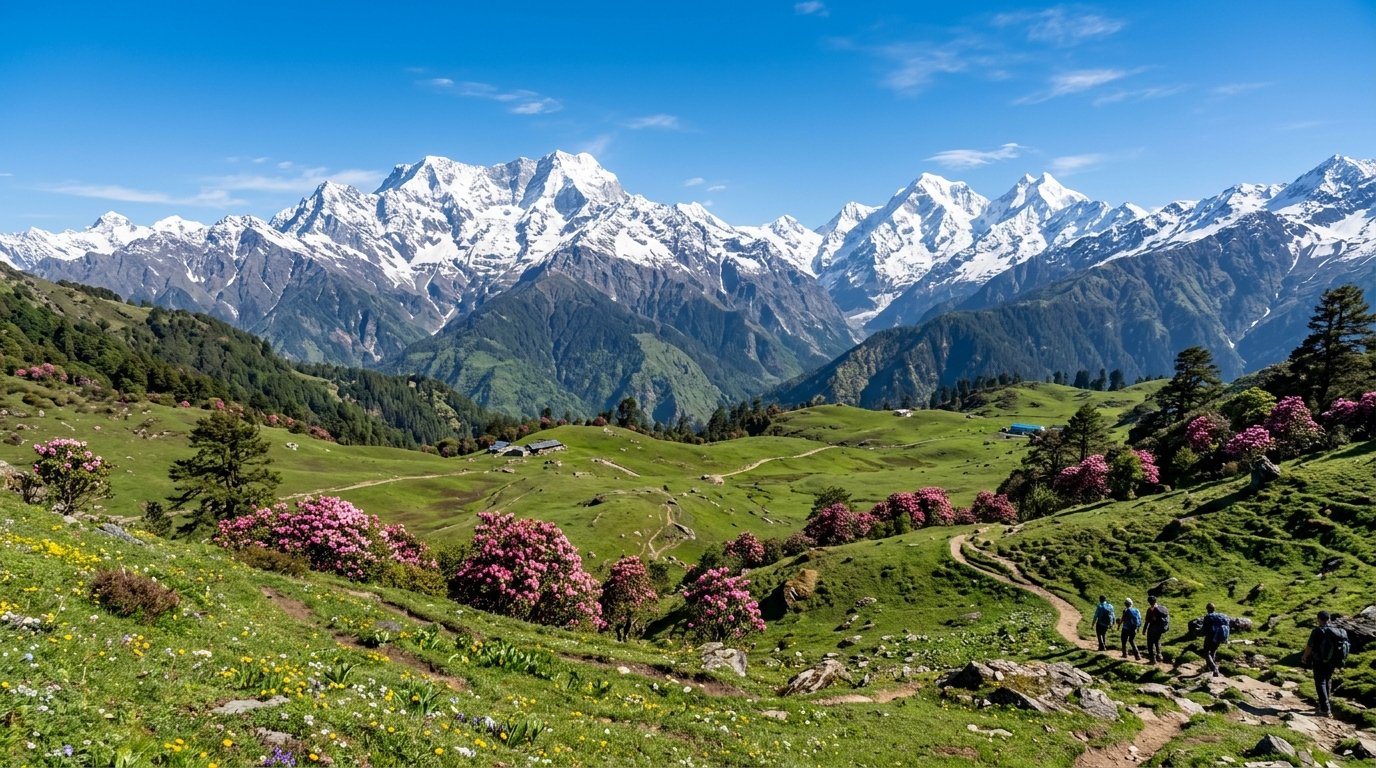
Swayambhu Lingam: Conical triangular rock worshipped without elaborate carving
Bhairavnath Temple: Guardian deity shrine perched on neighboring ridge
Access: 16 km trek from Gaurikund or helicopter shuttle from Phata/Sersi
Winter Seat: Omkareshwar Temple at Ukhimath
View Kedarnath Guide
Tungnath Temple Highest Shiva Temple 2nd Kedar · 3,680 Metres
Rudraprayag District 3.5 km Trek from Chopta Divine Arms (Bahu) of Shiva

Tungnath — Highest Shiva Temple on Earth

Perched at an astonishing elevation of 3,680 meters amidst alpine bugyals, Tungnath is where the divine arms (Bahu) of Lord Shiva materialized. The temple is built of massive grey stone slabs. A further 1.5 km steep climb leads to the summit of Chandrashila Peak (4,000 m) with 360-degree views of Nanda Devi, Trishul, and Chaukhamba.

World Record: Highest altitude Shiva shrine anywhere in the world
Chandrashila Summit: Breathtaking panorama of Himalayan giants
Access: Well-paved stone path starting from Chopta base (3.5 km)
Winter Seat: Village Makkumath
View Chopta & Tungnath Guide
Rudranath Temple Chamoli 3rd Kedar · 2,286 Metres
Chamoli District 20 km Trek from Sagar Village Divine Face (Mukh) of Shiva

Rudranath — The Mystical Face of Mahadev

Surrounded by dense rhododendron woodlands, emerald bugyals, and holy tarns (Surya Kund, Chandra Kund, Tara Kund), Rudranath is where the face of Lord Shiva is worshipped as Neelkanth Mahadev. It is regarded as the most challenging yet spiritually rewarding trek among the Panch Kedar.
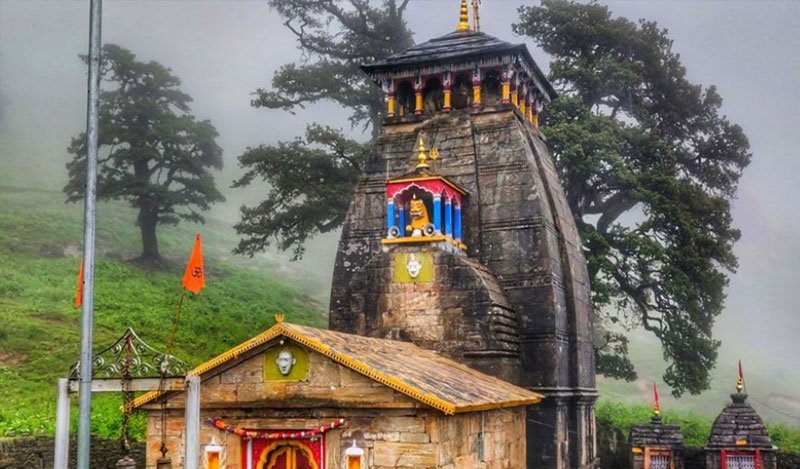
Natural Rock Cave: The deity's serene face is worshipped inside a natural rock shelter
Panar Bugyal: Spectacular high-altitude alpine meadow crossed enroute
Access: Arduous 20 km trek from Sagar village (near Gopeshwar)
Winter Seat: Gopinath Temple at Gopeshwar
View Gopeshwar & Rudranath
Madhyamaheshwar Temple 4th Kedar · 3,497 Metres
Rudraprayag District 16 km Trek from Ransi Village Divine Navel (Nabhi) of Shiva

Madhyamaheshwar — The Sacred Navel

Nestled in a green amphitheater directly beneath the majestic four-peaked Chaukhamba mountain massif, Madhyamaheshwar enshrines the navel and stomach of Lord Shiva. The black stone navel-shaped lingam radiates intense spiritual serenity. A short 1.5 km climb further leads to Budha Madhyamaheshwar, where Chaukhamba mirrors perfectly in tiny glacial pools.
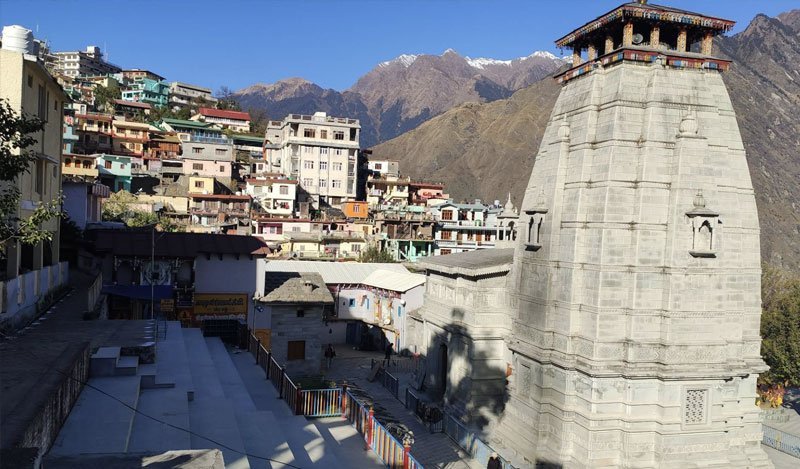
Chaukhamba Reflection: Iconic mirror view of 7,138m peaks in summit tarns
Classic Architecture: Traditional North Indian stone shikhara design
Access: 16 km trek from Ransi village through Gaundhar and Nanu
Winter Seat: Omkareshwar Temple at Ukhimath
View Madhyamaheshwar Guide
Kalpeshwar Temple Urgam Valley 5th Kedar · 2,200 Metres
Chamoli District Motorable via Urgam Valley Divine Matted Locks (Jata) of Shiva

Kalpeshwar — The Matted Locks (Open Year-Round)

Located inside a small subterranean stone cave in the terraced, fertile Urgam Valley, Kalpeshwar is where Lord Shiva’s matted hair (Jata) is venerated. It is the only temple among the Panch Kedar that remains open throughout all 12 months, as its lower elevation protects it from heavy winter snow. The ancient wish-fulfilling Kalpvriksha tree stands nearby.

12-Month Access: Never closes for winter; accessible year-round
Cave Sanctum: Hair locks worshipped in a natural rock grotto
Access: Drivable road till Devgram/Urgam; gentle 1 km walk to temple
Nearby Wonder: Ancient Kalpvriksha tree and Dhyan Badri shrine
View Joshimath & Urgam Valley
THE PILGRIM CIRCUIT

Complete 15-Day Panch Kedar Trekking Route

A well-paced, comprehensive circuit to visit all five shrines in traditional scriptural sequence.

1

Days 1–3: Rishikesh to Kedarnath Dham (1st Kedar)

Drive 215 km + 16 km Trek
Drive from Rishikesh to Guptkashi/Sonprayag. Next morning, begin the 16 km trek from Gaurikund along the Mandakini river to Kedarnath. Attend evening Aarti at the 1st Kedar and stay overnight near the temple.
2

Days 4–5: Kedarnath to Chopta & Tungnath (2nd Kedar)

Trek 16 km down + Drive 75 km + Trek 3.5 km
Trek down to Gaurikund and drive through the scenic Mandal-Ukhimath road to Chopta. Trek 3.5 km up the paved trail to Tungnath (highest Shiva temple), summit Chandrashila Peak (4,000m), and return to Chopta.
3

Days 6–8: Chopta to Ransi & Madhyamaheshwar (3rd Kedar)

Drive 45 km + 16 km Trek each way
Drive to Ransi village via Ukhimath. Trek through dense subtropical forests and Gaundhar to Madhyamaheshwar. Have darshan of the divine Navel, witness the Chaukhamba sunrise at Budha Madhyamaheshwar, and trek back to Ransi.
4

Days 9–12: Ransi to Sagar & Rudranath Trek (4th Kedar)

Drive 85 km + 20 km Trek each way
Drive to Sagar village near Gopeshwar. Begin the challenging 20 km climb through the vast alpine grasslands of Panar Bugyal and Pitradhar to Rudranath. Offer prayers before the peaceful face of Lord Shiva, then return to Sagar.
5

Days 13–15: Gopeshwar to Urgam, Kalpeshwar (5th Kedar) & Return

Drive 50 km + 1 km Walk; Return 240 km to Rishikesh
Drive to Helang and ascend into the picturesque Urgam Valley. Walk 1 km through terraced fields to Kalpeshwar cave temple to seek blessings from the divine Matted Locks. Conclude the sacred Panch Kedar pilgrimage and drive back to Rishikesh.
WINTER ABODES OF THE DEITIES

Where Lord Shiva Resides in Winter

When heavy snow blankets the high Himalayan sanctuaries, the sacred palanquins (Doli) of the deities descend to these lower winter seats for daily worship.

1st & 4th Kedar

Omkareshwar, Ukhimath

Winter seat of both Lord Kedarnath and Lord Madhyamaheshwar. Priests from Rawal lineage conduct daily rituals here from November to April.

2nd Kedar

Makkumath Village

Winter home of Lord Tungnath. Located just 19 km from Chopta, surrounded by peaceful oak and rhododendron forests.

3rd Kedar

Gopinath Temple, Gopeshwar

The festive Doli of Lord Rudranath descends to the historic 11th-century Gopinath stone temple, renowned for its giant ancient trident.

5th Kedar

Urgam Valley (Never Moves)

Kalpeshwar stays open throughout winter. The deity never moves from the rock cave, allowing year-round darshan.

FREQUENT QUESTIONS

Panch Kedar Yatra FAQs

Essential travel information for planning your Panch Kedar pilgrimage and trek.

What is the scriptural sequence to visit the Panch Kedar?
The traditional order of pilgrimage begins with Kedarnath (Hump), followed by Tungnath (Arms), Rudranath (Face), Madhyamaheshwar (Navel), and concludes at Kalpeshwar (Hair Locks).
Which of the Panch Kedar is the most difficult trek?
Rudranath is widely considered the most physically demanding, requiring a 20 km steep uphill hike through thick forests and the high-altitude windswept meadows of Panar Bugyal. Madhyamaheshwar is a close second with a 16 km trek from Ransi. Kalpeshwar is the easiest (1 km gentle walk), and Tungnath is a moderate 3.5 km paved trek from Chopta.
What is the best time of year to undertake the Panch Kedar Yatra?
The ideal windows are May to June (Summer) when alpine wildflowers bloom and trails are snow-free, and September to October (Autumn) when the post-monsoon skies offer crystal-clear views of snow-capped Himalayan peaks. Heavy monsoon months (July–August) should be avoided due to slippery mountain trails.
Can I do individual Kedars instead of the full circuit?
Absolutely! Many travelers visit individual temples based on time and physical fitness. Tungnath & Chandrashila can be done over a weekend from Chopta. Kedarnath is commonly visited as part of the Char Dham Yatra. Madhyamaheshwar and Rudranath are popular standalone week-long trekking expeditions.

Embark on the Path of Lord Shiva

Need experienced trekking guides, mule arrangements, GMVN guesthouse bookings, or customized Panch Kedar itineraries? Talk to our Himalayan pilgrimage experts today.

Send Enquiry Spiritual Destinations