Overview & Significance
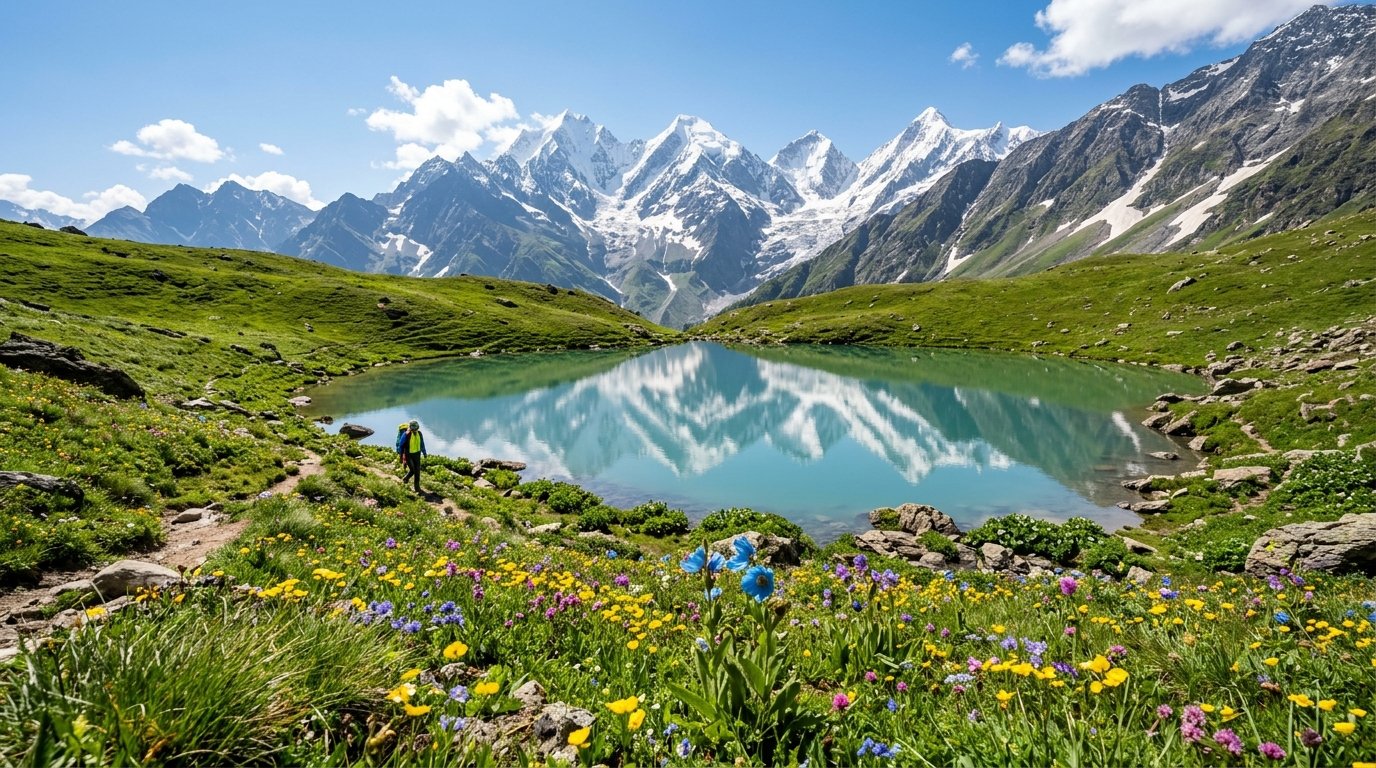
Rising in dramatic, serrated grandeur above the virgin oak and deodar canopy of eastern Kumaon, the Panchachuli Glacial Viewpoint within the Askot Wildlife Sanctuary commands one of the most sublime and spiritually evocative Himalayan vistas on Earth. From this high ridge-line promontory, travelers gaze directly across the deep glacial valleys upon the iconic Five Peaks of Panchachuli—a pristine massif whose snow-capped spires range in elevation from 6,334 meters (20,781 ft) to 6,904 meters (22,651 ft).
In Hindu mythology and local Himalayan lore, the name Panchachuli is derived from the "Five Cooking Hearths" (Panch Chuli) of the Pandavas from the epic Mahabharata. It is believed that after their great victory in Kurukshetra, the Pandava brothers and Draupadi cooked their final earthly meal upon these five distinct summits before taking their final ascent into the heavens (Swargarohana). The five distinct pyramidal peaks—numbered Panchachuli-I through Panchachuli-V from northwest to southeast—stand like giant sentinels guarding the Darma and Lassar Yankti valleys.
What distinguishes the Panchachuli viewpoint inside Askot from other lookouts in Uttarakhand is the sheer proximity and vertical drama. Situated barely 30 kilometers as the crow flies from the main massif, the peaks tower directly overhead, their hanging glaciers, icefalls, and knife-edge fluted arêtes gleaming with blinding brilliance against deep azure mountain skies. At first light, as the rising sun paints the icy summits in shifting shades of violet, crimson, and incandescent gold, witnessing Panchachuli from Askot is a transcendent experience that embodies the very essence of Devbhumi.
Key Highlights of Panchachuli Glacial Viewpoint
- Unobstructed front-row panorama of all Five Peaks of Panchachuli (P-1 to P-5), ranging up to 6,904 meters elevation.
- World-class sunrise and sunset alpenglow photography with sweeping views across cloud inversions in the Gori river valley.
- Deep mythological resonance as the legendary cooking hearths of the five Pandava brothers and Draupadi.
- Panoramic visual sweep encompassing neighboring high peaks including Rajrambha (6,537m), Chaudhara, and Mount Api (7,132m) in western Nepal.
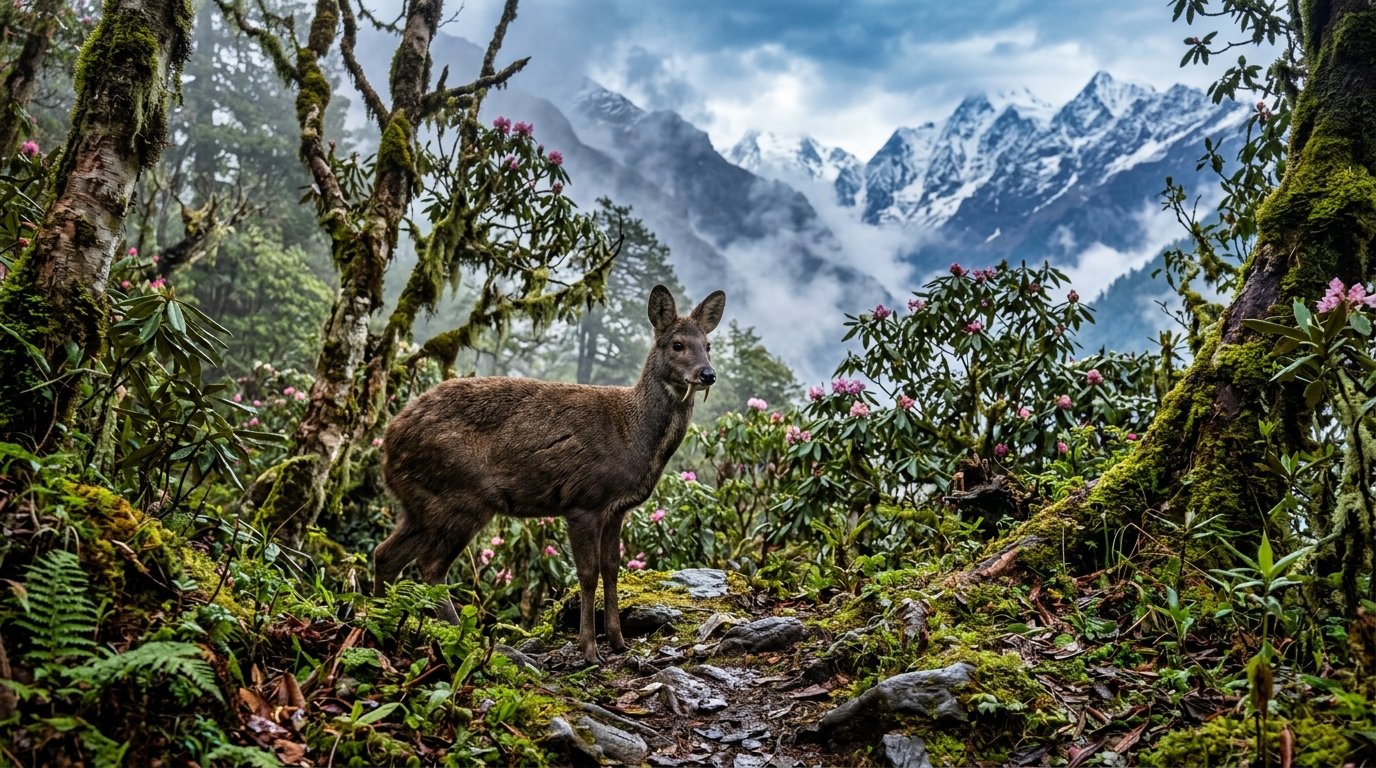
- Scenic ridge-top nature walk through fragrant virgin deodar, moru oak, and rhododendron forests rich in Himalayan birdlife.
- Equipped with binoculars and spotting telescope platforms installed at designated eco-viewpoints by the Uttarakhand Forest Department.
Historical Background & Heritage
The five peaks of Panchachuli have captivated mountaineers, geographers, and spiritual seekers for centuries. Mentioned reverently in the ancient Skanda Purana as part of the sacred Manaskhanda realm, the massif historically marked the natural fortress wall separating the trans-Himalayan trade routes of the Johar and Darma valleys.
During the 19th and early 20th centuries, surveyors of the Great Trigonometrical Survey of India mapped the peaks from high stations across Pithoragarh and Askot, marveling at the technical complexity of the group's sheer granite walls and heavily crevassed hanging glaciers. Panchachuli-II, the highest of the five summits at 6,904m, resisted numerous international climbing attempts before being successfully summitted in 1973 by an Indo-Tibetan Border Police (ITBP) expedition led by Mahendra Singh.
The establishment of the Askot Wildlife Sanctuary in 1986 placed the prime visual access routes to the massif under strict environmental protection. Rather than building commercial hotel complexes on these sensitive ridgelines, the Forest Department designated natural eco-viewing decks along the traditional sheep trails, ensuring that future generations can witness the pristine glory of Panchachuli in its untamed, natural sanctuary setting.
Geographical Setting & Features
The Panchachuli Viewpoints are intentionally designed as minimalist, low-impact eco-observatories: - Natural Stone Viewing Terraces: Constructed using traditional dry-stone masonry (dhauli) that blends invisibly into the mountain ridge, preventing soil erosion while providing stable platforms for tripods and visitors. - Timber Benches & Gazebos: Rustic deodar wooden shelters equipped with sloping slate roofs provide weather protection during brief mountain showers without obstructing panoramic sightlines. - Information Panels & Peak Indicators: Well-crafted interpretive brass and slate plaques illustrate the names, elevations, and mythological histories of each of the five peaks, helping travelers identify surrounding peaks such as Rajrambha and Mount Api across the international border.
Things to Do & Experiences
Witness the Golden Hour Sunrise
Arrive at the viewpoint by 05:30 AM to watch the first golden rays of sunlight strike the summit of Panchachuli-II, cascading downward across the five spires in luminous brilliance.
Landscape & Telephoto Photography
Capture razor-sharp close-ups of hanging seracs, fluted snow ridges, and summit cornices using telephoto lenses (200mm – 500mm).
Raptor & High-Altitude Birdwatching
Scan the thermals rising from the Gori River valley to observe Golden Eagles, Bearded Vultures (Lammergeiers), Himalayan Griffons, and soaring falcons.
Ridge-Line Nature Hike
Enjoy a peaceful 3-kilometer morning walk along the pine-cushioned ridge path connecting the viewpoint to the Askot forest rest cabins.
Stargazing & Milky Way Alignments
On clear, moonless autumn nights, capture long-exposure astrophotographs showing the glowing core of the Milky Way arching majestically above the snowy silhouette of Panchachuli.
Pack a Himalayan Sunrise Picnic
Carry a thermos of piping-hot Pahadi chai and freshly baked local confectionery to savor the mountain vista in peaceful contemplation.
Best Time to Visit & Seasonal Advice
Clarity of the atmosphere is the most crucial factor for mountain viewing at the Panchachuli Viewpoint: - Autumn (October to November): The golden season for Himalayan panoramas. The post-monsoon atmosphere is thoroughly washed clean of dust and haze, offering near 100% visibility of the peaks from dawn until dusk. - Winter (December to February): Phenomenal crystal-clear winter skies with deep contrast. The peaks are laden with pristine fresh snow. Morning temperatures on the ridge are brisk (2°C to 8°C), so warm woolens and windcheaters are essential. - Spring (March to April): Mild temperatures and blossoming rhododendron woods frame the snow peaks in crimson and pink. Morning views are exceptionally clear, though afternoon convection clouds often roll in by midday. - Monsoon (July to August): The peaks are frequently shrouded behind thick monsoon cloud banks, offering only occasional, dramatic glimpses between rain breaks.
How to Reach & Local Transit
The viewpoint is located along the elevated ridge trail of Askot Sanctuary: - By Road: From Askot town or the Pithoragarh-Jauljibi highway, an uphill branch road leads 4 km to the upper sanctuary ridge parking area near Kaflani. - Scenic Walking Trail: From the upper roadhead, a gentle 15-minute nature walk along a pine-shaded flagstone trail leads directly to the primary viewing platform. - Distance from Key Hubs: - From Askot town: 5 km (15 mins drive). - From Didihat: 38 km (1.2 hours). - From Pithoragarh: 58 km (2 hours).
Entry Permits, Timings & Guidelines
To preserve the tranquility and natural environment of the viewpoint: - Sanctuary Permit: Access is covered under the standard Askot Wildlife Sanctuary day permit (₹150 for Indians, ₹600 for Foreigners). - Eco-Regulations: Littering, smoking, loud sound systems, and plastic pollution are strictly prohibited. Visitors must pack out all waste. - Drone Regulations: Flying commercial camera drones requires prior written clearance from the Pithoragarh District Magistrate and the Forest Department due to proximity to the international border.
Where to Stay & Eco-Lodges
Ideal accommodation options for catching the dawn sunrise over Panchachuli: - Askot Forest Rest House (Upper Ridge): Provides the most immediate access; wake up right on the ridge and walk to the viewpoint in minutes. - KMVN Tourist Rest House, Didihat: Located on an adjacent high ridge 35 km away, offering comfortable rooms with private balconies facing the Himalayan range. - Village Eco-Homestays in Askot: Traditional homestays offering home-cooked mountain meals, hot wood-fired water, and guidance on local sunrise timing.
Frequently Asked Questions
According to Hindu epic tradition in the Mahabharata, the Five Peaks of Panchachuli represent the five legendary cooking hearths (chulis) used by the five Pandava brothers and Draupadi to cook their final meal before their ascent to heaven.
Panchachuli-II is the highest of the five summits, reaching a staggering elevation of 6,904 meters (22,651 feet) above sea level.
Early morning during sunrise (between 05:30 AM and 07:00 AM) is by far the most spectacular time. The rising sun illuminates the eastern face of the peaks in intense crimson, orange, and brilliant gold before daytime clouds develop.
The primary viewpoint ridge is located approximately 5 km uphill from Askot town, accessible via a short 15-minute drive followed by an easy 15-minute walking nature trail.
Yes. Looking eastward from the ridge across the Kali River gorge, you can clearly see the glaciated massif of Mount Api (7,132m) and Mount Nampa in western Nepal.